IRATA Level 1
For beginners, work is performed perform a specified range of rope access tasks under the close supervision of a Level 3 rope access

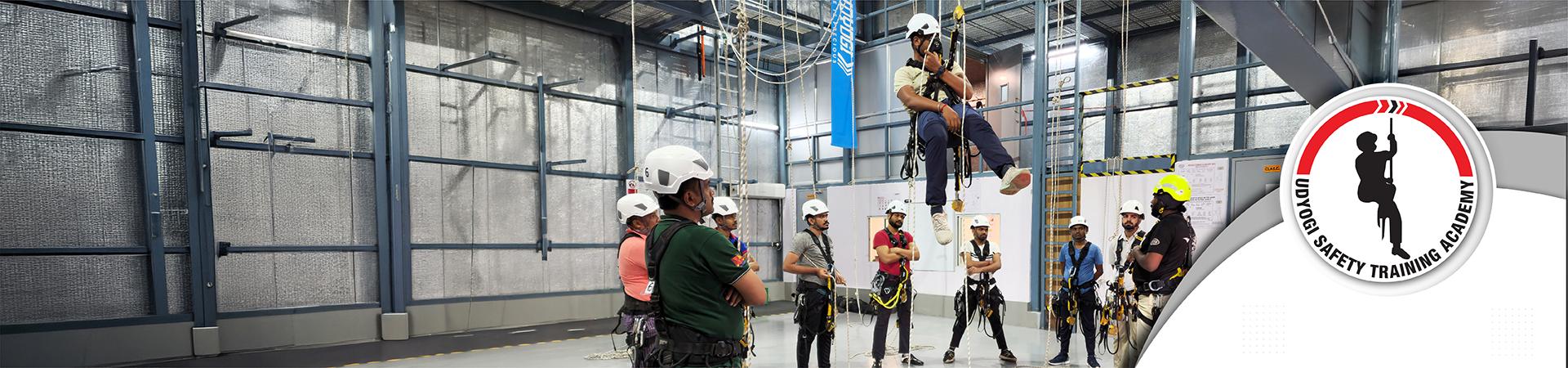

Is committed to building capability, confidence, and a culture of safety across industries. As the training arm of Udyogi Plastics Pvt. Ltd., USTA delivers specialized training programs in industrial rope access, work at height, and rescue operations.
The academy provides a comprehensive range of certified safety courses focused on height safety, confined space entry, PPE inspection, façade maintenance, and transmission line rescue. Through practical training, industry-focused modules, and globally aligned safety practices, USTA empowers professionals with the knowledge, skills, and confidence to work safely, respond effectively, and perform responsibly in challenging industrial environments.
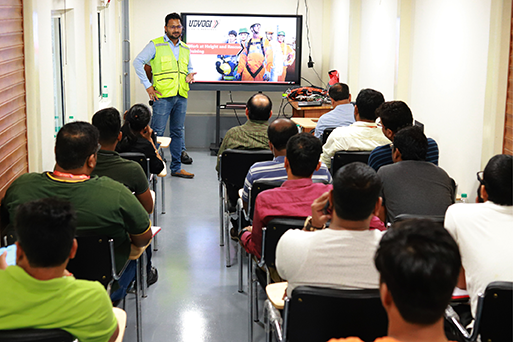
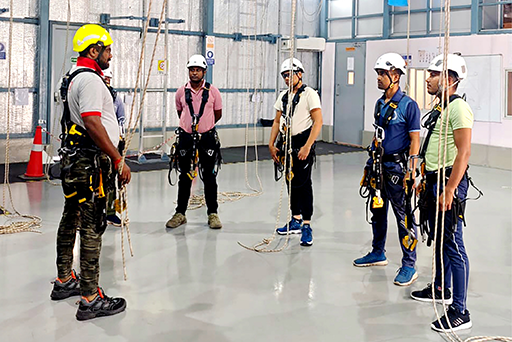

IRATA training is a globally recognized rope access certification program designed to develop safe work-at-height skills, rescue capability, and operational competence for high-risk industrial environments. The program combines theoretical and practical training in rope access, rigging, rescue, and safety procedures, preparing professionals to work safely and efficiently across industries.
For beginners, work is performed perform a specified range of rope access tasks under the close supervision of a Level 3 rope access
Experienced rope access technician perform more complex tasks, such as assisting other workers and installing equipment
The supervisor is responsible for overseeing and managing the team using Rope Access, assessing safety on-site,
Rope access refresher course for those who have not worked for more than 6 months.
Work at Height training is designed to equip professionals with the knowledge, practical skills, and safety awareness required to perform tasks safely in elevated working environments. The program focuses on hazard identification, fall prevention, PPE usage, rescue preparedness, and safe work practices to reduce risks and ensure compliance across high-risk industrial operations.
Fully customised Work at Height & Confined Space Rescue training programs designed to address the unique hazards, structural layouts, & operational challenges of your site.

Please use the button below to view and book available from our available training dates.
Book TrainingIRATA training is highly practical in nature. Along with theoretical sessions, participants undergo extensive hands-on rope access exercises, rescue techniques, climbing maneuvers, and equipment handling under controlled training environments.
Participants are generally advised to bring comfortable work clothing, safety shoes, and personal identification documents. All major rope access and rescue equipment required for training is typically provided during the course.
IRATA Level 1 training is suitable for individuals who wish to begin a career in rope access and work-at-height operations. Candidates must be at least 18 years old and physically fit to perform rope access activities safely.
No prior rope access experience is required for Level 1 training. However, candidates should be comfortable working at heights and capable of performing physically demanding activities.
IRATA certification remains valid for 3 years from the date of assessment. Technicians are required to renew their certification before expiry to maintain validity.
The standard IRATA training program is conducted over 5 days, followed by an independent assessment and theoretical examination.
Assessment includes practical demonstrations of rope access techniques, rescue procedures, safety practices, and a theoretical examination conducted by an independent IRATA assessor.
For Level 2 and Level 3 progression, candidates must complete the required logged work hours, maintain the minimum experience period between levels, and successfully pass the respective assessment.
Yes. Rope access work is physically intensive and requires good overall fitness. Candidates should not have medical conditions that may affect safe working at heights.
IRATA-certified technicians are employed across industries such as oil & gas, construction, telecom, power, wind energy, infrastructure maintenance, industrial inspection, and confined space operations.
Yes. Successful candidates receive internationally recognized IRATA certification, allowing them to work on rope access projects globally under IRATA standards.
IRATA standards emphasize rigorous training, dual-rope safety systems, rescue preparedness, strict operational procedures, and continuous competency assessment, contributing to an exceptional global safety record.
IRATA-certified professionals are widely employed in industries such as renewable energy, offshore oil & gas, telecom, infrastructure maintenance, construction, marine, and industrial inspection services.
Yes. Since IRATA certification is globally recognized, technicians can work on international rope access and industrial maintenance projects across multiple countries and industries.
Yes. Rescue techniques form a critical part of IRATA training. Participants are trained in emergency rescue procedures, casualty handling, and safe evacuation practices during practical sessions.
Rope access methods provide faster access, reduced downtime, improved flexibility, and minimal structural disruption compared to traditional scaffolding or mechanical access systems in many industrial applications.